
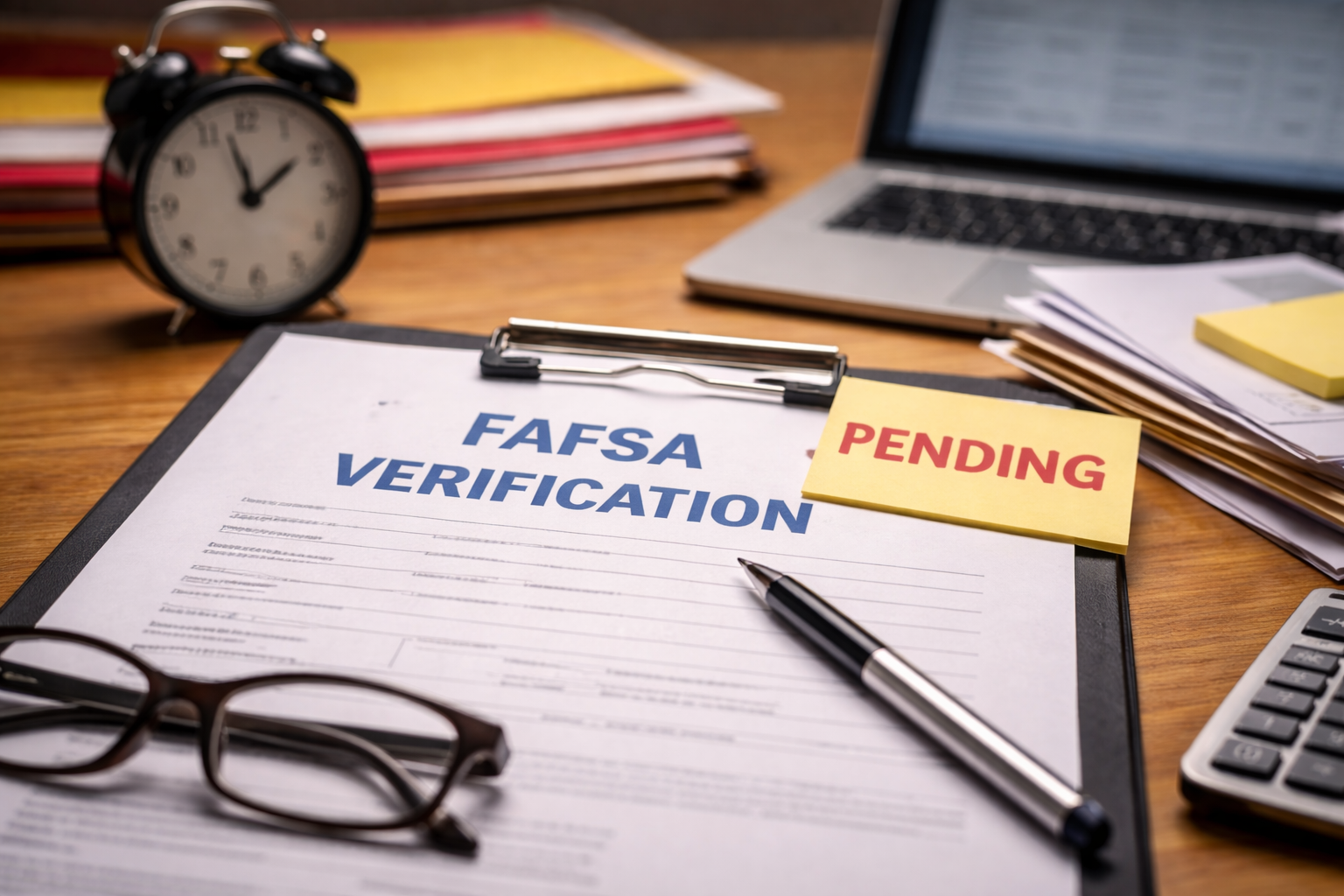
FAFSA verification pending how long wasn’t a question I expected to ask. The FAFSA was submitted, the confirmation email arrived, and I assumed the process was moving forward. Then the status changed. “Verification pending.” No explanation. No timeline. Just a pause that felt longer each time I logged back in. The problem wasn’t the request itself. It was realizing that waiting, without knowing where my file sat, could quietly change the outcome.
FAFSA verification pending how long becomes stressful once you realize everything else keeps moving. Schools don’t stop reviewing files. Tuition and housing timelines don’t pause. I wasn’t panicking, but I kept circling the same question—whether this was still normal, or whether doing nothing was already a decision.
This guide explains why verification happens and what being “selected” actually means before you assume something went wrong.
Why Verification Suddenly Freezes the Process
FAFSA verification pending how long feels unclear because verification is not a single step. Once selected, your application is paused while specific data points are checked. This can include income figures, household size, tax filing status, or identity information.
From a family’s perspective, it looks like nothing is happening. From the system’s perspective, your file is waiting for confirmation. That gap between perception and reality is where most anxiety comes from.
What “Pending” Usually Means in Real Life
FAFSA verification pending how long depends less on the calendar and more on completeness. If all requested documents are submitted correctly, many verifications move through within a few weeks. If anything is missing, unclear, or inconsistent, the status can sit unchanged.
Common reasons a file stays pending include:
- Documents submitted but not yet reviewed by the school
- Tax or income data that requires manual confirmation
- Verification requests that were missed or misunderstood
- Schools waiting to batch reviews during busy periods
Pending does not automatically mean there is a problem. It means the review is incomplete.
If your verification involves income or tax data, this explains why those cases often take longer to clear.
How Schools Handle Verification Delays
FAFSA verification pending how long matters because schools cannot finalize aid offers until verification is complete. Many financial aid offices package aid in cycles. If your file is still pending when a cycle closes, the school may:
- Hold your file until verification clears
- Delay issuing an aid offer
- Request additional documentation for clarification
This is not a punishment. It is a compliance requirement schools must follow.
Your Rights While Verification Is Pending
FAFSA verification pending how long does not mean you have to stay silent. You are allowed to ask:
- Whether the school received all required verification documents
- Whether anything is missing or needs clarification
- Whether your file is being held or reviewed in the next cycle
Clear, date-based questions are more effective than repeated check-ins. You’re not rushing them—you’re preventing avoidable delays.
What Actually Helps the Process Move
FAFSA verification pending how long becomes manageable when you focus on what the system responds to. These steps help in real situations:
- Confirm exactly which documents were requested
- Submit only what was asked for, clearly labeled
- Keep proof of submission dates
- Check your school portal for updates, not just the FAFSA site
What often makes things worse:
- Sending extra documents “just in case”
- Resubmitting files without changes
- Ignoring school-specific portals or messages
This official government resource explains how verification ties into reviewing and updating your FAFSA.
Mistakes That Keep Verification Pending Longer
FAFSA verification pending how long is often extended by small but common mistakes:
- Missing signatures or incomplete forms
- Uploading unreadable or incorrect documents
- Failing to respond to follow-up requests
- Assuming one school’s submission covers all schools
Verification delays are usually procedural, not personal.
FAQ
How long does FAFSA verification usually take?
There is no fixed timeline. Some verifications clear in a couple of weeks, while others take longer depending on document review and school workload.
Does verification mean something is wrong?
No. Many applications are selected randomly or due to common data patterns.
Should I contact FAFSA or the school?
Schools manage verification. Contact the financial aid office once documents are submitted.
Can verification delay my financial aid offer?
Yes. Aid cannot be finalized until verification is complete.
Key Takeaways
- FAFSA verification pending how long depends on document completeness and school review cycles.
- Pending status does not automatically mean a problem.
- Schools cannot finalize aid until verification clears.
- Clear communication and complete documents reduce delays.
What to Do If Your Status Hasn’t Changed
FAFSA verification pending how long becomes risky when deadlines approach. If your status hasn’t changed and time matters, take action now:
- Step 1: Review the verification request and confirm all documents were submitted.
- Step 2: Check your school’s portal for missing items.
- Step 3: Contact the financial aid office with your submission date and ask if anything else is needed.
If your verification is affecting overall FAFSA processing, this explains how delays interact with aid timelines.
FAFSA verification pending how long feels uncomfortable mostly because there’s no signal telling you whether waiting is still safe.
Still, waiting without checking your position in the process is how small delays become bigger problems. Being organized and specific keeps you in control.
FAFSA verification pending how long should not be the reason your aid is delayed. If you’ve submitted everything and nothing has changed, act now: confirm your documents, review your school portal, and ask the financial aid office whether your file is complete and queued for review. You’re not rushing the process—you’re making sure timing, not silence, determines what happens next.