
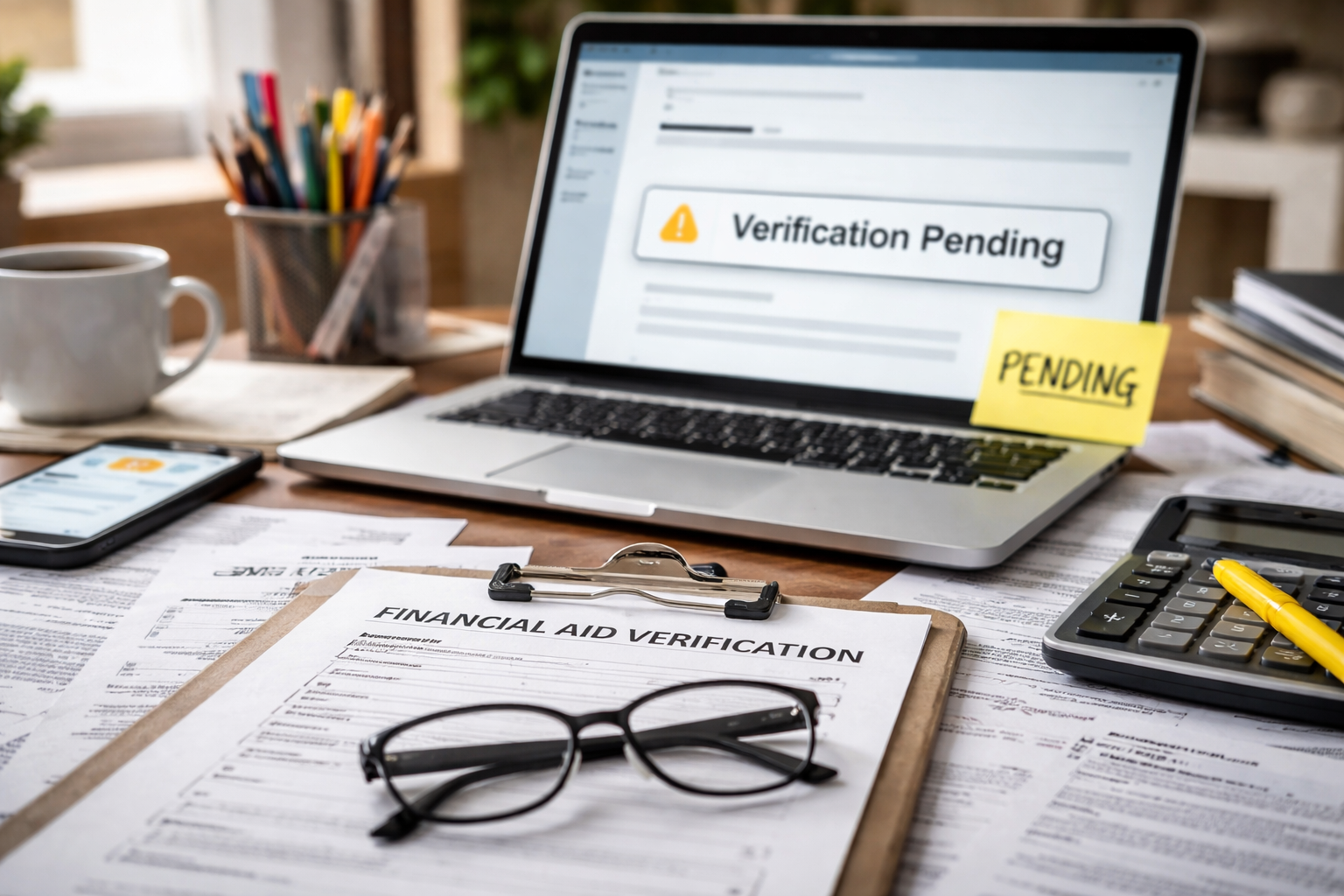
financial aid verification delay what to do hit me in the most ordinary way: I logged into the portal expecting a simple update. I wasn’t looking for a bigger award. I wasn’t chasing extra money. I just wanted confirmation that my documents were reviewed. Instead, the status was unchanged—still pending—and the message center was empty.
For the first minute, I tried to rationalize it. Weekends. Backlogs. A busy office. Then I saw the date on the school’s billing email and felt my stomach drop. The scary part wasn’t the delay—it was realizing the deadline clock was still running while the portal stayed frozen. That’s when financial aid verification delay what to do became the only question that mattered.
When families talk about “verification,” they often imagine a clean timeline: submit, review, approve, done. Real life doesn’t work like that. Sometimes everything is submitted correctly, and the file still sits. Sometimes a tiny mismatch stalls the process without telling you what to fix. And sometimes the school doesn’t “nudge” you because the system assumes you’ll speak up if timing is tight.
If your portal looks stuck, this is the closest hub guide on your site that explains what “pending” usually means and what you can realistically ask for next.
The Moment a Delay Becomes Risk
A delay is annoying. A risky delay is different. The danger begins when your school’s timeline (housing confirmation, course registration, tuition due dates) gets close enough that your account could be treated like “no aid” temporarily.
Many schools do not automatically pause billing because your verification is pending. That doesn’t mean they’re being unfair; it means their billing and aid systems often run on separate tracks. This is exactly why financial aid verification delay what to do must be approached as deadline management, not just waiting for a review.
When you’re within a couple of weeks of a due date, your objective changes: you’re not only asking “when will this be processed?” You’re also protecting yourself from consequences like late fees, losing a payment plan slot, or having registration blocked.
Why “No Updates” Happens
There are a few common realities behind a silent portal. Some offices review in batches. Some files are in a manual queue. Some documents are “received” but not marked “complete.” And sometimes a mismatch exists, but the system doesn’t generate a clear task list until a staff member opens the file.
This is where people waste time refreshing the page, hoping the status changes on its own. financial aid verification delay what to do is not a portal problem—it’s a communication problem. Your goal is to confirm one of two things: (1) your file is complete and awaiting review, or (2) something specific is missing or inconsistent.
When you ask the right way, you often get a real answer quickly. When you ask vaguely (“Any update?”), you can get a vague response (“It’s processing.”) that changes nothing.
What to Ask Without Sounding Demanding
Here’s the approach that worked for me: keep it short, factual, and deadline-based. You are not trying to “pressure” them. You are making your timeline visible so they can help you choose the correct next step.
Use one email with one request and one deadline reference. For example: “Can you confirm whether my verification file is complete and awaiting review, or if a specific document is still needed? My tuition due date is [date].” This tone is calm, useful, and difficult to ignore.
Then, if you get confirmation that you are complete, your next question becomes: “Is there a temporary billing hold, extension, or payment plan option available while verification is reviewed?” That’s not a threat. It’s planning. And it’s exactly what financial aid verification delay what to do is really about.
The Fastest “Reality Check” Steps
If you need a clean checklist that doesn’t waste time, do these in order:
- Confirm receipt: Ask if documents are marked received and complete.
- Confirm status: Ask if the file is awaiting review or missing something specific.
- Confirm deadline impact: Ask whether pending verification affects registration or billing status.
- Ask for interim options: Extension, temporary hold, or payment plan adjustments.
- Save everything: Keep a dated copy of emails, submissions, and portal screenshots.
This isn’t about being dramatic. It’s about not letting a quiet delay create loud consequences. financial aid verification delay what to do works when you treat the situation like a timeline you can manage.
If your delay is happening before the school can even finalize your FAFSA data, this guide breaks down system-level slowdowns that can make verification feel “stuck.”
Mistakes That Can Reset the Clock
Some actions feel helpful but can slow things down. Re-uploading the same documents multiple times can create duplicates. Sending daily “checking in” emails can bury the one message that had the deadline detail. Calling without your student ID or document list can turn a quick confirmation into a long back-and-forth.
The biggest mistake is waiting until you’re blocked from registration or housing. At that point, offices can still help, but your options narrow and urgency rises. financial aid verification delay what to do is about moving earlier—while you still have leverage.
Another common error is mixing issues. If your concern is a verification delay, don’t bundle it with an appeal argument in the same message. Keep verification communications clean. If you need to appeal later, that’s a separate process with a different goal.
If Enrollment Is Close, Do This Today
When enrollment is close, prioritize actions that protect access, not just aid timing. Ask whether your school can place a temporary hold on penalties or keep your account from triggering restrictions while verification is reviewed. Some schools can note your account. Some can extend deadlines. Some can suggest a short-term plan that avoids losing your schedule.
This is also where you keep your language steady. “I’m verified and complete” is only helpful if it’s true. If you’re not sure, say: “I believe all documents are submitted—can you confirm whether my file is complete?” That phrasing prevents confusion and shows you’re acting responsibly.
financial aid verification delay what to do is ultimately about preventing a paperwork delay from turning into an enrollment disruption.
Key Takeaways
- Verification delays are common, but deadline consequences are real.
- Portals can stay silent even when action is needed—don’t rely on status alone.
- One calm message with a deadline reference is more effective than many vague follow-ups.
- Ask about interim billing or enrollment options while verification is under review.
FAQ
How long can verification take?
Timelines vary by school and season. What matters most is how close you are to billing, housing, and registration deadlines.
Should I upload documents again if nothing changes?
Only if the aid office asks you to. Duplicate uploads can slow review and create confusion.
Can I still start classes if verification isn’t finished?
Sometimes yes, but it depends on your school’s policy and your billing status. Ask about temporary holds or payment plan options.
What if verification leads to an award change?
That’s possible, especially if updated information changes eligibility. If that happens, respond based on the new award notice and ask about next steps.
If verification delays end up pushing you into an appeal timeline, this checklist helps you prepare documents cleanly without guessing.
What to Do Right Now
I’m going to be direct, because this is where people lose time. Write one message today. Ask the office to confirm whether your verification file is complete and whether it is awaiting review or missing a specific item. Include your nearest deadline. Then ask what interim option exists if review extends past that date.
Do not wait for the portal to “eventually” catch up. The portal updates after decisions. Your job is to protect your timeline before decisions land. If you do nothing else, do that.
That’s how financial aid verification delay what to do becomes an outcome instead of a spiral: you stop guessing, you get a confirmation, and you preserve enrollment options while the process finishes.
For official federal guidance on verification (what it is and where to find help), use this U.S. Department of Education page.