
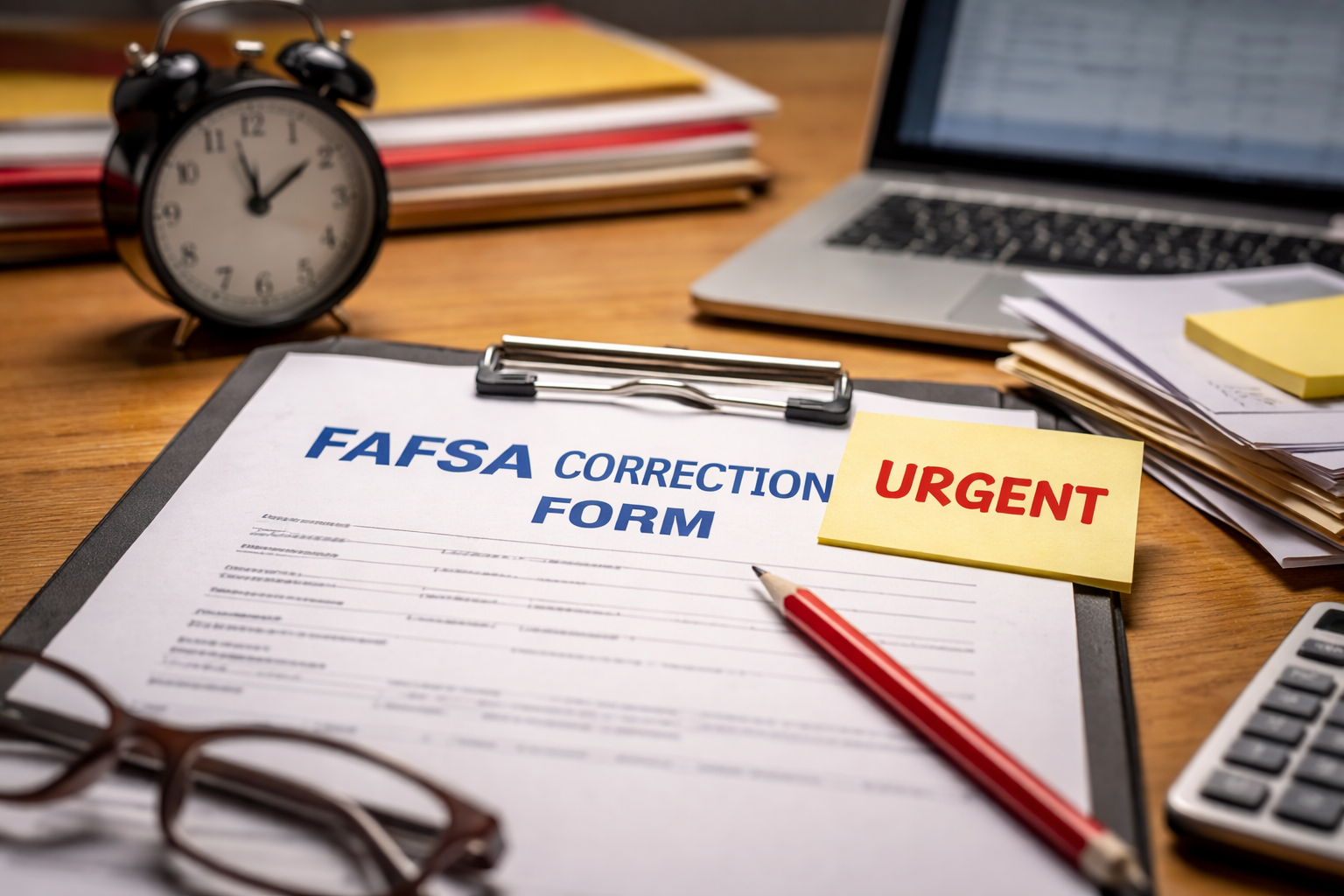
FAFSA correction processing time didn’t feel like a real issue at first. The FAFSA was already submitted, the confirmation came through, and I moved on. Then I caught the mistake. It was small—something you assume can be fixed without consequence. I corrected it, hit submit, and expected the system to update shortly. It didn’t. The problem wasn’t the correction itself. It was what happened after—nothing.
FAFSA correction processing time becomes a deadline problem when everything else keeps moving. Tuition bills don’t pause. Housing deposits don’t wait. Some schools start packaging aid while your correction is still sitting in a queue. I wasn’t panicking, but I was checking the portal more than I wanted to admit, wondering whether to call, email, or stay quiet. That’s when it became clear this wasn’t about patience. It was about making sure a slow update didn’t quietly turn into a missed opportunity.
If your FAFSA status already feels stuck before or after changes, this guide helps you interpret what “delay” usually signals and what to do first.
What “Processing Time” Looks Like When You Need an Answer Now
FAFSA correction processing time is not a clean, predictable countdown. In real life, the same correction can move fast for one family and slowly for another, even when the change looks similar. What matters is whether your correction touches fields the system treats as high-impact—income, household size, dependency indicators, marital status, or anything tied to tax information.
Here’s the practical takeaway: your goal isn’t to guess an exact number of days. Your goal is to know whether you are still in normal waiting time or whether the delay is starting to create risk with your school’s aid packaging timeline. That’s a different question—and it’s one you can answer by checking the right signals.
The Two Signals That Tell You If You Should Keep Waiting
FAFSA correction processing time feels longest when you’re only watching the main status line. Instead, look for these two signals:
- Submission confirmation date for the correction (proof you actually sent the update)
- Any new flags, requests, or next steps that appear after the correction (these often explain why updates are slower)
If you have a correction submission confirmation and no new request has appeared, you may still be in normal processing. If you see a request for documentation, verification language, or “action needed,” you should treat the delay as a workflow change—not a technical glitch.
Why Some Corrections Move Slower Than the Original FAFSA
FAFSA correction processing time can be longer than the original submission because corrections can trigger additional validation. Some fields act like “switches” that cause the system to re-check multiple areas. When that happens, you aren’t just updating one line—you’re re-opening the file for review.
In practice, slowdowns often happen when:
- Your correction changes tax-related numbers or filing status
- The correction alters dependency-related answers
- The update conflicts with what schools already received earlier
- The system needs a second pass (or your school needs updated data)
This is why re-submitting again and again can backfire. If each new correction forces re-validation, you can unintentionally keep yourself in “processing” mode longer.
If your correction touched income or tax fields, this explains the most common mismatch patterns and how families resolve them without creating new delays.
How Financial Aid Offices Treat a Slow FAFSA Update
FAFSA correction processing time matters because schools have their own calendars. Many aid offices package offers in waves. If the school has an older FAFSA record and your correction hasn’t reached them in time, they may:
- Package aid based on the earlier data
- Hold the file until updated information arrives
- Request documents to reconcile what changed
None of these are “bad” by itself, but all of them can create a delay that feels personal even when it’s procedural. A slow update can become an award delay even when you did everything right.
Your Rights While You Wait
FAFSA correction processing time does not remove your right to clarity. You are allowed to ask:
- Whether the school has received your corrected FAFSA data
- Whether your file is on hold pending verification
- Whether there is a school-specific document request you should complete now
When you contact a school, keep it short and structured. Here’s a clean script you can adapt:
- “I submitted a FAFSA correction on (date).”
- “Can you confirm whether your office has received the corrected record?”
- “If not, is my file being packaged using the earlier data or placed on hold?”
- “Is there anything you need from me now to prevent delays?”
Structured questions get faster answers than long explanations.
What Actually Helps Versus What Only Feels Helpful
FAFSA correction processing time improves when you stop guessing and start managing the process. These steps help in the real world:
- Save proof of correction submission (date, confirmation, screenshots if needed)
- Check for new requests (verification notices or school portal tasks)
- Contact the school at the right moment (especially if packaging dates are close)
What usually does not help:
- Submitting multiple corrections in a short window “just in case”
- Changing unrelated fields that were already correct
- Calling multiple offices with different stories and no dates
This official page outlines the correction process and what families can change after submission.
The Mistakes That Extend Processing Time the Most
FAFSA correction processing time gets worse when families unintentionally create extra review triggers. The biggest mistakes are:
- Rapid-fire corrections that restart validation
- Over-correcting by changing multiple fields that don’t need changes
- Ignoring verification language and assuming “processing” means “done soon”
- Waiting too long to contact the school when packaging deadlines are close
If you are within a tight deadline window, silence is not neutral. Silence can mean your file is simply not moving fast enough for the school’s schedule.
FAQ
How long does FAFSA correction processing time usually take?
There is no single guaranteed timeline. Some corrections move quickly, while others slow down if the change triggers additional review or documentation requests.
Will a slow correction delay my financial aid offer?
It can. Schools often need finalized FAFSA data to package grants, loans, or work-study. If updated information arrives late, the school may hold your file or package using earlier data and revise later.
Should I contact FAFSA or the school?
If your portal shows the correction is processed, contact the school to confirm they received the updated record. If your correction is still processing and school deadlines are near, you can still contact the school to ask whether your file is on hold and what they recommend you do now.
Should I submit another correction to “push it through”?
Usually no. Multiple corrections in a short time can extend review. Only submit another correction if you discover a genuine new error that affects eligibility.
Key Takeaways
- FAFSA correction processing time is variable and can be longer when high-impact fields change.
- Repeated corrections can extend delays by restarting validation.
- Schools package aid on their own timelines, so a slow update can become an award delay.
- Save proof of submission, watch for new requests, and contact the school with structured questions.
What to Do Today If Your Status Still Hasn’t Updated
FAFSA correction processing time becomes dangerous when it causes you to miss a school’s packaging window. If your correction has been sitting and you’re approaching deadlines, do these three things today:
- Step 1: Write down the correction submission date and capture proof (confirmation, screenshot, or portal history).
- Step 2: Check whether any new request appeared (verification, documentation, or “action needed”).
- Step 3: Email the school’s financial aid office with your dates and ask whether they have the corrected record and whether your file is on hold.
If your correction triggered verification, this is the next-step checklist that prevents long delays and missing documents.
FAFSA correction processing time is frustrating mostly because it feels out of your hands. Once the correction is submitted, there’s no obvious next step—just waiting. Still, that waiting isn’t empty time. Keeping your submission proof, watching for requests, and knowing the school’s internal timeline quietly puts you back in control.
FAFSA correction processing time doesn’t have to shape the outcome on its own. If nothing has changed and deadlines are getting closer, do something small but specific: pull the correction date, check for verification signals, and ask the school whether the updated record has arrived or whether your file is on hold. You’re not pushing the process—you’re making sure a solvable delay doesn’t decide things for you.