
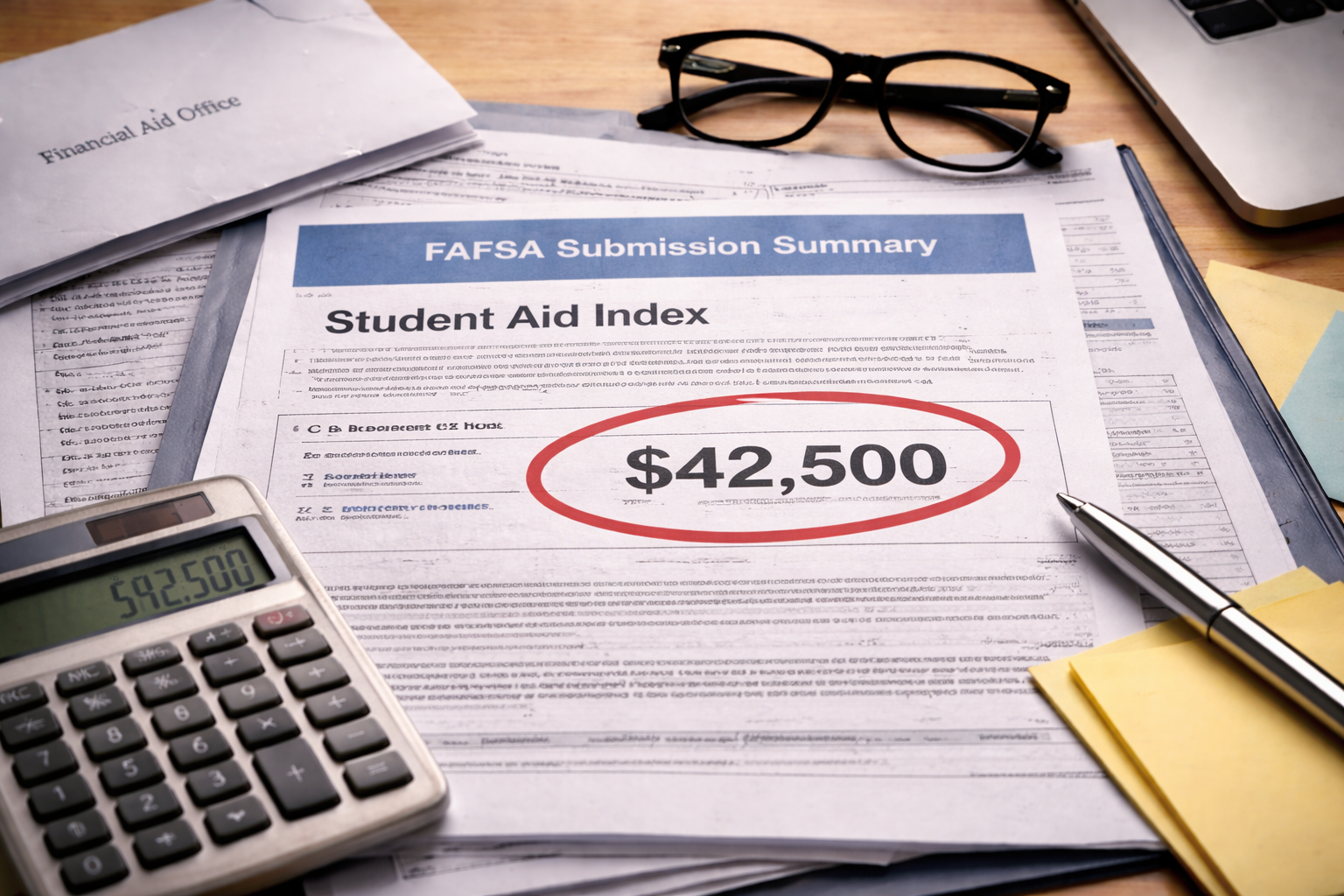
SAI too high what to do. I didn’t panic at first. I assumed I was reading the FAFSA page wrong, or that the number would change once the school processed it. But the more I stared at the Student Aid Index, the more obvious it became: this number didn’t reflect our actual situation at all.
Nothing dramatic had happened in our finances. No sudden raise, no hidden assets, no lottery win. Yet the SAI suggested we could comfortably contribute far more than we realistically could. That quiet mismatch was the first sign that something in the system didn’t line up with real life.
If you’re here because SAI too high what to do suddenly feels like an urgent question, this article is for you. This isn’t about learning what SAI is in theory. It’s about figuring out why your number looks wrong and what to do next—before deadlines close and aid decisions harden.
This guide explains what it means when FAFSA is processed but aid results don’t make sense.
Quick self-check: is this really your situation?
This page applies to you if most of these feel true:
- Your FAFSA was submitted and marked as processed
- Your Student Aid Index is much higher than expected
- Your financial situation hasn’t meaningfully improved
- Schools are offering little or no need-based aid
If this list fits, the issue is rarely “you make too much money.” In many cases, SAI too high what to do comes down to data interpretation, timing, or missing context the FAFSA formula doesn’t see.
Why SAI can look unrealistically high
SAI too high what to do starts with understanding one uncomfortable truth: the FAFSA formula assumes stability unless you explicitly show otherwise.
Common reasons SAI appears inflated include:
- Income reported from a year that no longer reflects reality
- One-time income events treated as recurring
- Assets counted that aren’t easily accessible
- Family size or household data misreported
- Business or self-employment income overstated by timing
The FAFSA system doesn’t ask follow-up questions. It calculates based on what you enter and moves on.
What schools see when your SAI is high
From the college’s perspective, a high SAI signals “lower demonstrated need.” That label can quietly affect:
- Need-based grant eligibility
- Institutional aid consideration
- Priority for limited funding pools
Admissions offices rarely override this on their own. If SAI too high what to do applies to you, nothing changes unless you initiate the correction or appeal process.
This article explains how aid offers can shift when FAFSA data doesn’t tell the full story.
Case split: which situation are you actually in?
This is where most families finally see clarity.
- Case A: FAFSA data error or misinterpretation (correction needed)
- Case B: Accurate data but outdated income (special circumstances appeal)
- Case C: SAI is technically correct, but context matters (institutional discretion)
If you don’t identify the case correctly, you’ll ask the wrong office for help. That’s why SAI too high what to do becomes a timing problem as much as a math problem.
What you can legally ask for as a student or parent
You have the right to request review when FAFSA results don’t reflect your current reality. This includes:
- FAFSA corrections for factual errors
- Special circumstances or professional judgment reviews
- Reconsideration of need-based aid
No school is required to proactively fix this for you. You must ask.
What to do now (step-by-step)
If SAI too high what to do is your situation, take these steps in order:
- Step 1: Recheck FAFSA entries for income, assets, and household size
- Step 2: Identify whether income used reflects your current situation
- Step 3: Contact the financial aid office and ask about special circumstances review
- Step 4: Prepare documentation before deadlines
Effective questions sound like this:
- “Does my SAI reflect prior-year income that no longer applies?”
- “What documentation is required for a professional judgment review?”
- “Is there a deadline for reconsideration?”
Specific questions move your case forward faster than emotional explanations.
This guide explains how to formally request review without delaying your file.
What not to do (common mistakes)
- Assuming nothing can be done because FAFSA is “final”
- Waiting until tuition bills are due
- Submitting appeals without documentation
- Correcting FAFSA without understanding the impact
Silence or delay is often interpreted as acceptance.
FAQ
Does a high SAI automatically mean no financial aid?
No. It limits need-based aid, but institutional discretion and appeals still matter.
Can SAI be changed after FAFSA is processed?
Yes, through corrections or professional judgment reviews.
How fast should I act?
As soon as you see the number—before schools finalize aid offers.
Will appealing hurt my chances?
No. Appeals are normal and expected when circumstances don’t fit the formula.
Key Takeaways
- SAI too high what to do usually signals missing context, not disqualification
- FAFSA assumes stability unless you prove otherwise
- Corrections and special circumstances reviews exist for this reason
- Act early and document everything.
Even if your appeal doesn’t move the numbers, you’re not out of options—what you do next matters.
By the end of the day, the most frustrating part wasn’t the number itself. It was realizing how easily a formula could miss what life actually looks like.
If your SAI feels wrong, don’t wait for schools to fix it. Review your FAFSA, identify whether this is an error or a special circumstance, and request review now—before deadlines turn a fixable problem into a permanent outcome.
Official Federal Student Aid help center (one official external source).