
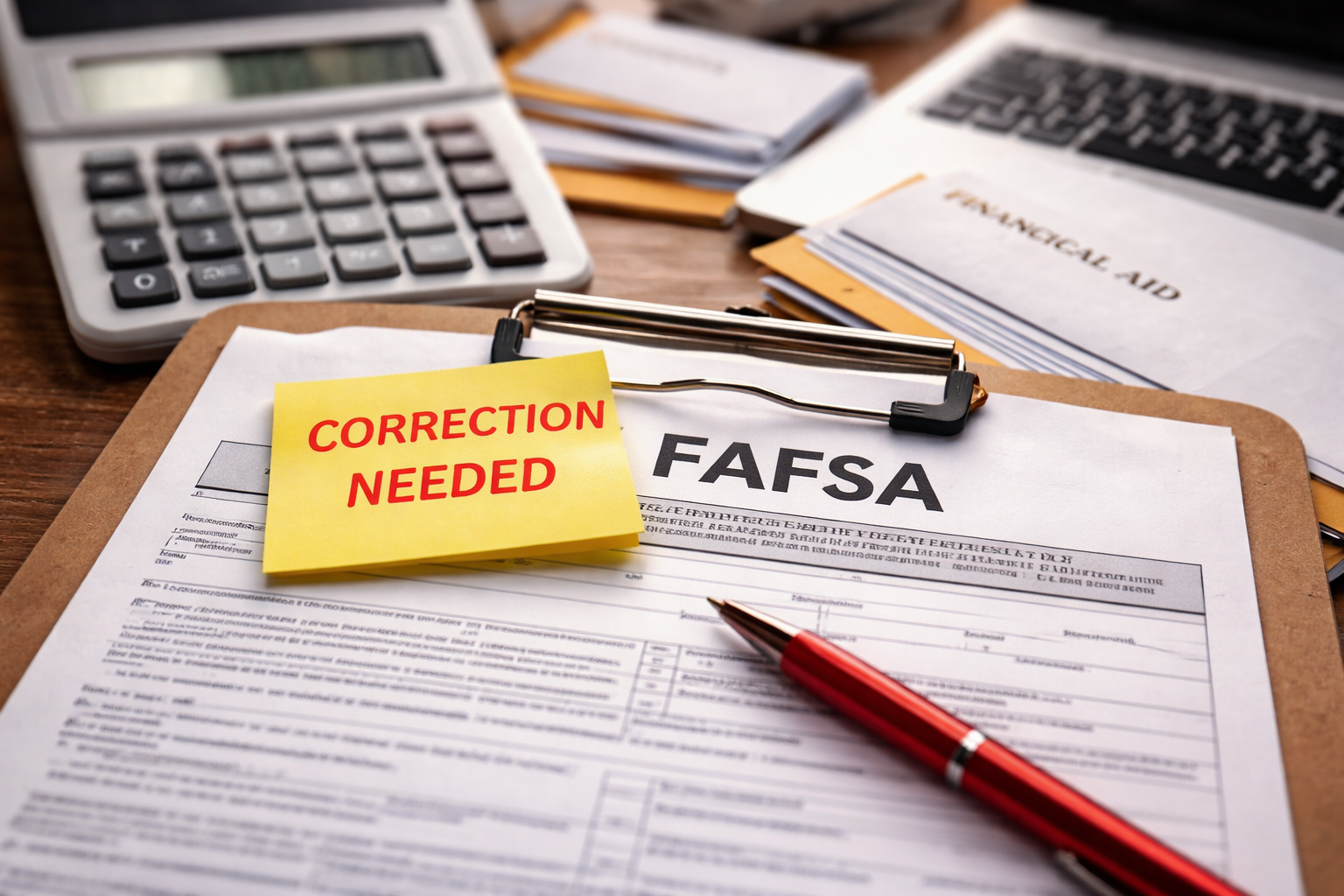
FAFSA correction after deadline became real for me at the worst possible moment: after I thought the FAFSA was “done.” I wasn’t redoing anything—I was double-checking a number for a school portal when I noticed a detail that didn’t match what we actually filed. I stared at the screen for a few seconds, not because I didn’t understand the mistake, but because I understood the timing.
FAFSA correction after deadline is the kind of problem that doesn’t feel dramatic until you picture what’s attached to it. Aid packaging. Housing deposits. Enrollment steps that quietly move forward while your record stays wrong. The pressure isn’t the form. It’s the possibility that one late fix turns into a late award.
If you’re not sure how “missed” is defined (and what schools do next), this explains the different deadline types and why some are stricter than others.
Why “After the Deadline” Doesn’t Always Mean “Too Late”
FAFSA correction after deadline sounds final because most families picture one single cutoff date. In practice, there are multiple clocks running at the same time: the FAFSA cycle, the school’s priority deadline, and the school’s internal review schedule. You can be “late” to one clock while still being in time for another.
The key is figuring out which timeline controls your specific school’s aid decision. A correction that lands before a school packages your file can still be reviewed normally. A correction that lands after packaging may still be reviewed, but it often requires clearer communication and sometimes a secondary review step.
What Schools and Aid Offices Actually Care About
FAFSA correction after deadline is judged less by the word “deadline” and more by two practical questions:
- Does the correction change eligibility or aid calculations?
- Is the student’s file already packaged, or still under review?
Schools are trying to package accurately and stay compliant. That means they care about clean, verifiable information. If your correction fixes a real data issue—income, household size, dependency status, taxes filed/not filed—it’s easier for them to justify reviewing it even if the date feels late.
What slows a late correction down is not the correction itself—it’s confusion. Multiple edits, unclear explanations, or missing proof can turn a simple fix into a back-and-forth that pushes the file to the end of the line.
What to Correct First (High Impact vs. Noise)
FAFSA correction after deadline works best when you prioritize impact. If you try to “perfect” everything, you risk delaying the only parts that matter.
- High impact: tax filing status, parent marital status, household size, income errors, major asset mistakes
- Medium impact: one-time changes that can be documented and explained clearly
- Low impact: minor typos that don’t change calculations
Fix the items that change the numbers first. Then stop and document what you changed and when.
If your correction is tied to tax data, this walks through why tax-related issues often trigger delays and how to correct them cleanly.
When to Stop Editing and Start Communicating
FAFSA correction after deadline becomes risky when you keep changing things without a plan. Once you’ve corrected the high-impact items, the next best move is often communication—not more edits.
Here’s what “good communication” looks like in the real world:
- The date you submitted the FAFSA and the date you submitted the correction
- A one-sentence summary of what changed (no long story)
- A clear question: whether the school has received the corrected record and whether your file is being packaged or held
Your advantage is being specific, not being emotional. Aid offices can’t move faster just because the situation is stressful, but they can respond faster when your message is clean and actionable.
The Most Common Mistakes After a Late Correction
FAFSA correction after deadline gets harder when families accidentally create extra review work. These are the patterns that often slow things down:
- Submitting multiple corrections in a short period without explanation
- Sending extra documents “just in case” before the school asks
- Using vague messages like “please update my aid” with no dates
- Assuming a portal status means the school has already received the correction
Late corrections succeed more often when you make the file easier to understand, not more complicated.
What “Processing” Means After You Submit a Correction
FAFSA correction after deadline can feel like it disappears into a queue. That’s normal. Corrections often move through stages: accepted by the system, transmitted to schools, then reviewed by the school’s financial aid office. The stage that matters most for you is the school’s review stage—because that’s what affects packaging and award timing.
If you’re watching for movement, focus on school portals and school communications. FAFSA status updates are useful, but school confirmation is the signal that matters.
This official resource explains how to review and correct your FAFSA and what to expect after submitting an update.
If Verification Appears After You Correct
FAFSA correction after deadline sometimes triggers a new complication: verification. That doesn’t mean you did something wrong. It can happen because the corrected data changes what the system flags for review or what the school needs to confirm.
If verification appears, your job is to respond quickly and cleanly—nothing more. Don’t over-submit documents. Don’t write essays. Provide exactly what is requested, keep proof of submission, and confirm the school received it.
If your portal says “verification pending,” this explains what timelines often look like and when it’s smart to follow up.
FAQ
Can I submit a correction even if the FAFSA deadline passed?
Often yes. The bigger question is whether your school can still apply the corrected information before packaging or before their internal deadlines.
Will a late correction automatically reduce my aid?
No. Aid is based on the underlying data. A correction can increase, decrease, or not change aid depending on what was wrong.
Should I email the school immediately?
If you corrected a high-impact item and deadlines are close, yes—send a short, date-based message asking if they received the corrected record.
What if the correction causes verification?
Verification is not a denial. Respond promptly with exactly what the school requests and keep your submission proof.
Key Takeaways
- FAFSA correction after deadline can still matter if your file hasn’t been packaged yet.
- Prioritize high-impact items first, then stop editing and document what changed.
- Schools care about clarity, dates, and completeness more than long explanations.
- Watch for verification signals and respond with clean, exact submissions.
FAFSA correction after deadline feels unsettling because you can’t see whether your update landed in time. Still, this is one of those situations where calm structure beats urgency. Accurate data, documented timing, and a clear message give your file the best chance to be reviewed correctly.
FAFSA correction after deadline doesn’t have to decide your outcome. Act now: correct only the high-impact items, save proof of submission, and contact the school with a short note that includes dates and the exact change you made. You’re not asking for special treatment—you’re making sure a fix doesn’t become a delay.
Schools usually won’t move an appeal forward until every required document is verified and clearly labeled.